Hello, it’s a great day to start a project.
Here's why paper cookbooks still have their place on our countertops.

Text: Marie Charles Pelletier
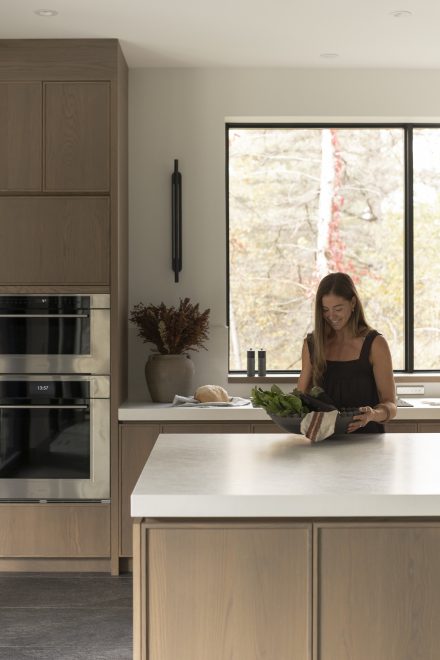
There is something deeply reassuring about cooking. A repeated gesture, a rhythm that settles in. The kitchen becomes a space apart, where time slows down and attention quietly returns to what is in front of us.
Preparing a dish of fresh pasta turns into a rare moment of presence, a silent dialogue between the hand, the ingredients, and cooking, accompanied by the steady company of an open cookbook. These gestures follow one another day after day, and with each tried or revisited recipe, they gradually shape a ritual.
Repeated movements within a stable framework lend continuity to often fragmented days. Psychological research studies link cooking to positive emotions, to a sense of commitment and accomplishment, while ritualized actions help reduce anxiety by offering structure and predictability.
The printed cookbook, through its simple material presence, plays a discreet yet essential role. It supports the ritual without interrupting it.
From the sauce-stained pages of Jehane Benoit‘s New Encyclopedia of Cooking to the dog-eared corners of Molly Baz‘s latest book, cookbooks tell a story. They reflect our tastes and keep track of repeated recipes.
Cookbooks influence not only the quality of our attention while cooking, but also our presence, our movement, and how we experience the moment.
Reading a recipe on paper engages our attention differently, creating a more intentional relationship with the text. Our gaze rests, uninterrupted, free from distractions.
On a screen, attention tends to scatter and comprehension frays, while paper invites a slower, steadier presence.
In the kitchen, this contrast becomes tangible: the book remains open, stable, and legible, requiring nothing more than a glance. It offers as a natural cognitive break.
In a saturated digital environment, activities that call for sustained yet gentle focus allow the mind to replenish itself.
Leafing through a book, following a clear recipe, one line at a time: these are simple gestures that quietly establish calm.

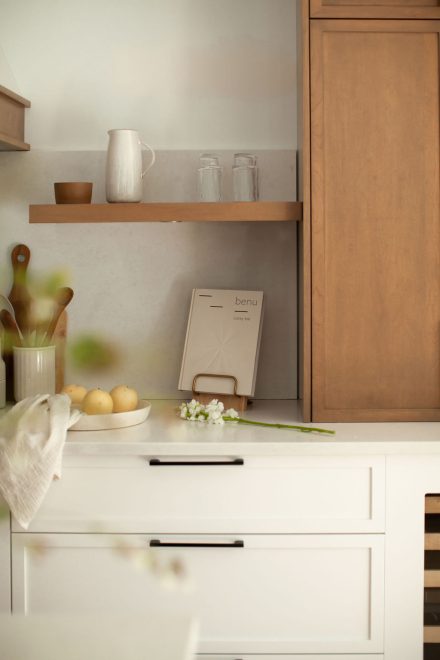
Ultimately, the book endures over time. Its worn corners, pages stained with chocolate or marked with fingerprints, testify to a familiar bond built over time.
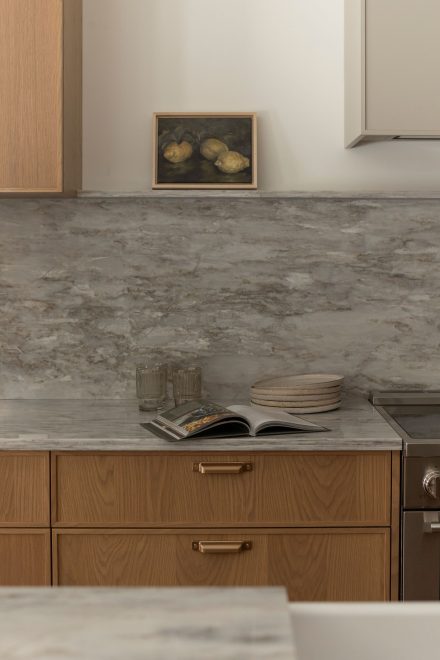
Placed on the counter, it accompanies the preparation, supports the ritual, and embodies a form of presence inherent to cooking: following the steps attentively, double-checking quantities, thinking aloud.
This book immediately adopts a different tempo: that of fermentation, waiting, and patience. Time becomes an ally, reminding us that transformation lies at the heart of cooking.
Born from the world of Noma, the three-Michelin-starred Danish restaurant, this book is an international reference, not meant for hurried hands but for those who appreciate demanding, slow, and thoughtful cuisine. The process prevails over the result.
A substantial and demanding work, designed to last, its clear layout invites focused reading and the calm that settles in when one agrees to slow down…
In these pages, chef-author Jeremy Fox offers a refined, introspective vision of plant-based cuisine. This book, which is more of a manifesto than a recipe collection, deliberately slows the pace.
Seasonality structures the reading as much as the cooking, imposing a chosen slowness. Each recipe seems to invite the reader to pause, observe, and understand the ingredient before transforming it.
The matte paper, the airy layout, the refined aesthetic: everything encourages a deliberate, almost meditative reading experience.
This book honours time, simplicity, and quality. Few ingredients, but precise techniques that require repeated gestures day after day until they become second nature. The slowness is never imposed, it arises naturally from the process itself.
The cuisine presented is profoundly everyday. The book accompanies learning over time with quiet rigor.
The book is designed to be use, consulted, annotated, even dusted with flour. It becomes a companion on the work surface rather than an object kept at a distance.
From the Italian institution Il Cucchiaio d’Argento, this book embodies continuity and transmission. Both reference and culinary memory, it rests on tradition and excellence.
Often compared to a living encyclopedia of Italian cooking, it celebrates consistency, the pleasure of repeating gestures, each time a little better.
Robust and substantial, the book is designed to last and perpetuate the tradition.
This book unfolds cuisine within another temporality, both cultural and culinary.
Chef Junghyun Park, renowned worldwide for his contemporary Korean cuisine, presents recipes shaped by precision and ceremony.
The kitchen becomes a place of concentration and discipline, celebrating time, fermentation, and preparation, inviting slow and attentive reading.
In a world that moves too fast, where traditions fade and attention is scattered, the printed cookbook acts as a natural counterweight to digital overload. It invites us to cook more slowly, more intentionally, turning ordinary gestures into rituals.
Preparing meals becomes a moment of calm, where the mind rests on the simple act of following each step. The pages we turn, stain, or annotate become signs of presence.
The books stand as witnesses to moments spent cooking, tasting, and gathering around a dish patiently prepared with loved ones. Ateliers Jacob‘s approaches each project with the same intention: to create spaces that soothe, endure, and quietly outlast the noise of the moment.