Hello, it’s a great day to start a project.
Somewhere between science and intuition, elements inspired by light, materials and forms have a real impact on our interiors and on us.
Text: Marie Charles Pelletier
The various interiors of our homes are not places we pass through, but places we inhabit. They are lived-in environments, shaped by morning light, quiet evenings, and the familiar rythms of daily life. When everything seems to be accelerating, the need to slow down gently, almost naturally, takes hold. In our homes, the choices we make reflect this desire for mental clarity, openness, and renewed calm.
Interior design has a real impact on us: it can highten visual noise or, conversely, foster deep tranquility. More and more, our intuitions are being supported by science. Integrating nature into our living spaces—through light, materials, shapes, or plants—truly contributes to well-being.
Understanding why nature soothes us, and how to meaningfully invite it into our homes, becomes a sensitive and enlightened approach.
Discover how to translate this approach into simple yet intentional gestures at home.
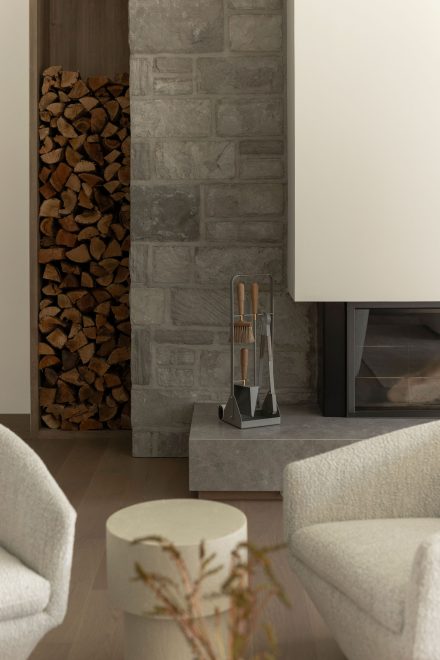
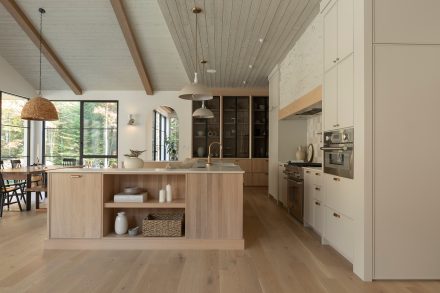
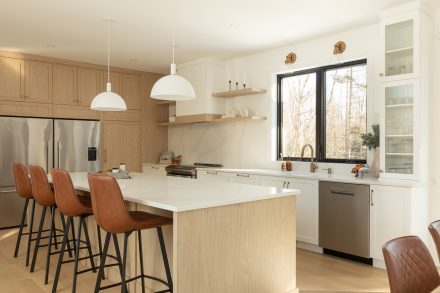
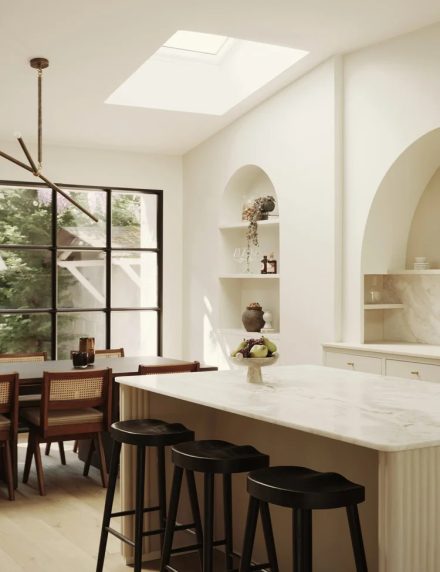
Natural light is one of the most powerful regulators of our nervous system. It influences our energy, our mood, even our ability to concentrate. When it flows freely through a space, it creates a sense of openness that soothes both body and mind.
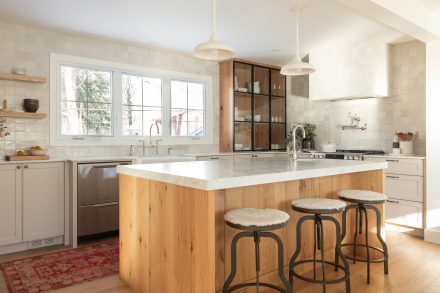
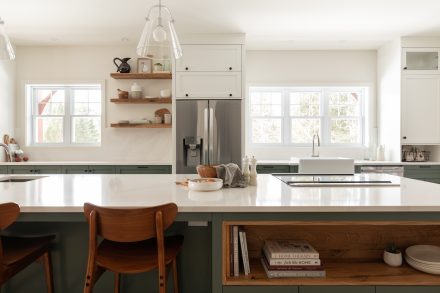
Openings to the outside world play a vital role in the balance of an interior, offering the eye a natural escape toward the living world. The simple sight of the sky, a tree, or a distant landscape acts as a visual pause: the gaze relaxes, and the body follows.
This effect is more than just an impression. In the article “Physiological Benefits of Viewing Nature: A Systematic Review of Indoor Experiments,” published in the International Journal of Environmental Research and Public Health, researchers demonstrate that visual exposure to natural landscapes—whether real views or representations such as photographs, paintings, or videos—triggers physiological responses associated with relaxation that are not observed in neutral or urban environments. In other words, simply seeing nature, even without being physically present, is enough to soothe the body.
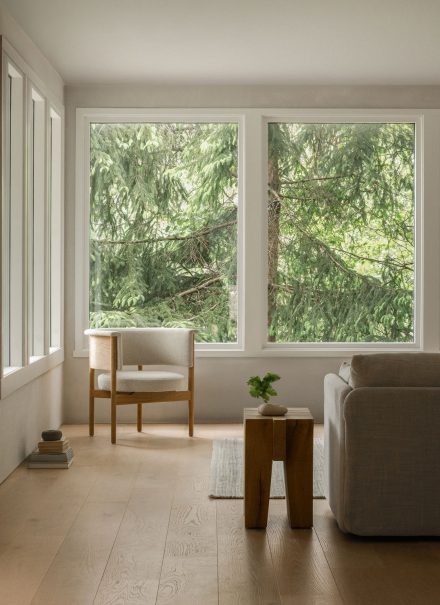

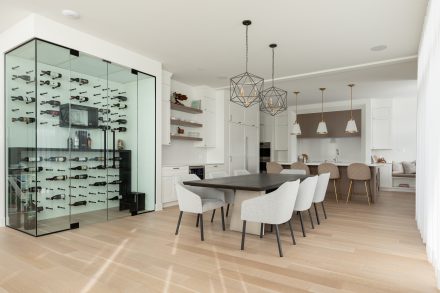
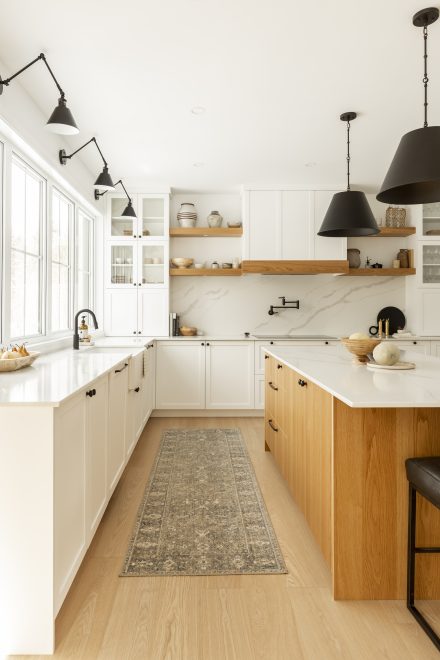
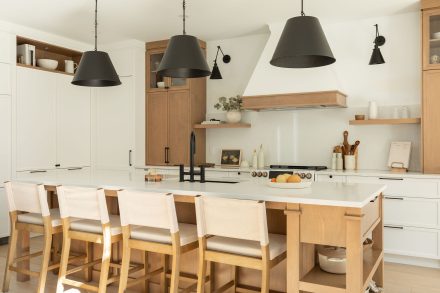
From a design perspective, this principle translates into real choices: soft colours, light-reflecting materials, large openings to the outside, and open layouts.
The article “Natural Light at Home: 5 Tips for a Warmer Winter” by Ateliers Jacob explores this topic, showing how to optimize light during darker seasons so they become sources of comfort and well-being.
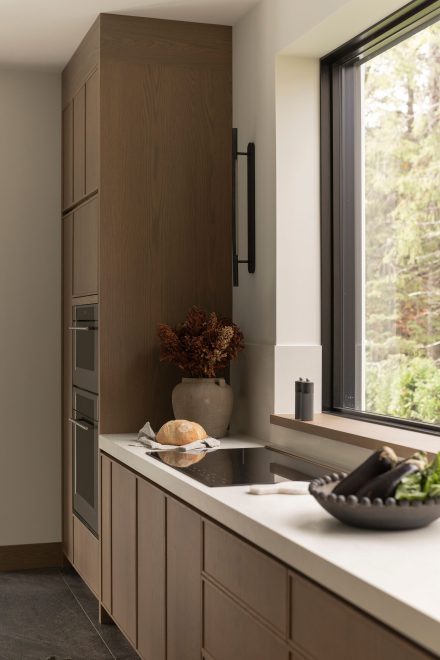
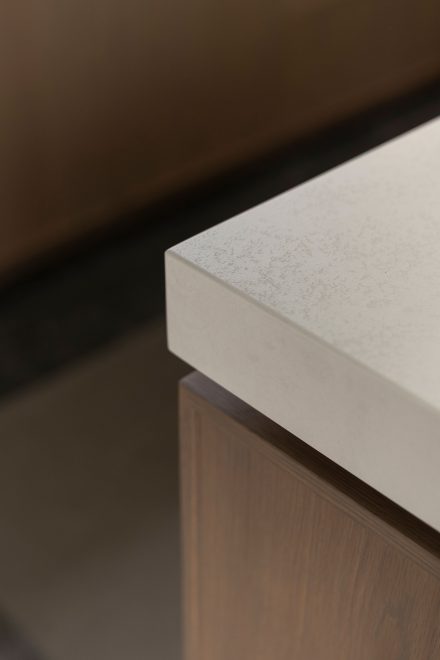
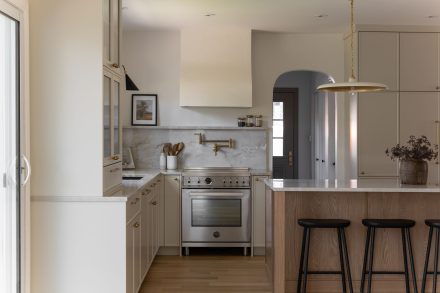
The materials we interact with every day profoundly influence our perception of space. The porous surface of a countertop, the scent of wood in the room, or the way sound reverberates off stone shape our experience of space far beyond aesthetics.
Natural materials act as an anchor, fostering a sence of stability, comfort, and continuity.
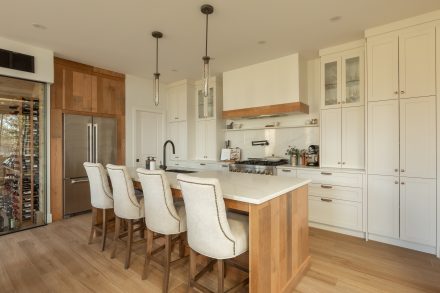
Wood, in particular, embodies a living and instinctively reassuring presence. Its texture, variations, and natural aging create a direct sensory connection with the living world.
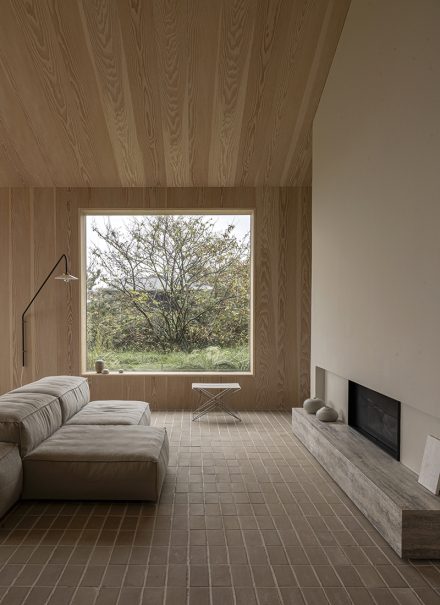
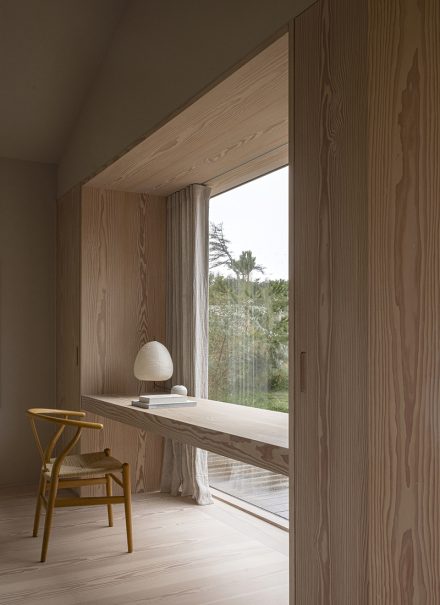
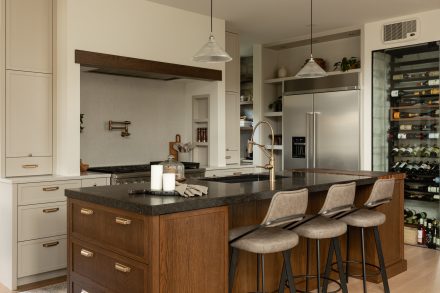
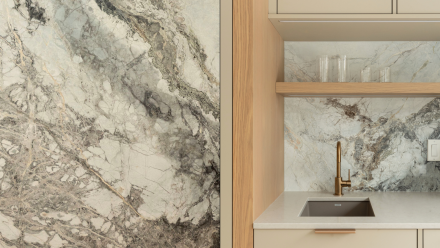
Natural stone—whether soapstone, granite, or quartzite—plays a complementary role. Through its density and permanence, it helps structure the space and stabilize its atmosphere by reinforcing visual balance.
This impression is now supported by scientific research. Studies show that simple visual contact with natural elements such as flowers, green plants, or wood produces measurable positive effects on brain activity and the autonomic nervous system, compared to environments lacking these stimuli.
In other words, these materials do more than please the eye: their presence has a deep, often unconscious impact that directly supports our inner balance.
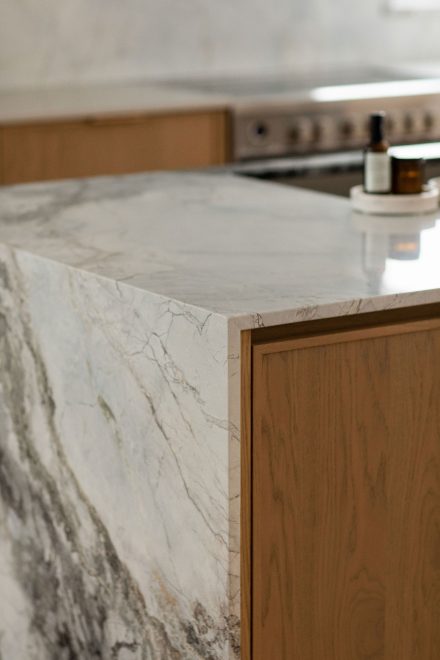
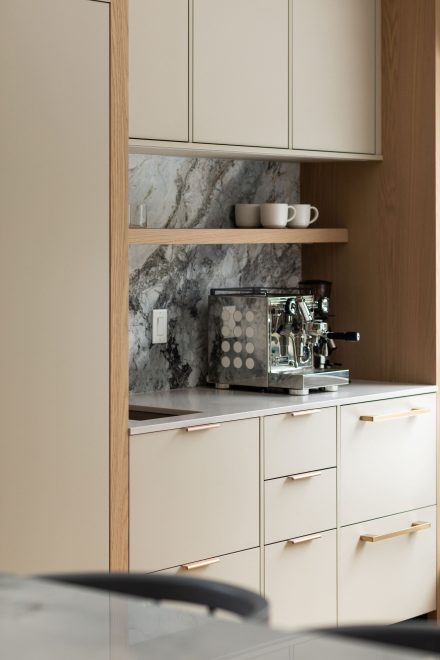
In a scientific study exploring the physiological effects of wood (Physiological Effects of Visual Stimulation by a Japanese Low Wooden Table: A Crossover Field Experiment), the authors demonstrate that environments incorporating wood can help reduce perceived stress and improve overall well-being.
These findings help explain the central role of natural materials in 2026 kitchen and dining room trends, driven by a search for sustainability and tranquility. Designers recommend limiting the number of materials to create a more harmonious visual experience, favoring matte and natural finishes, and choosing hardwoods—maple, white oak, ash, or walnut—renowned for their elegance and timeless beauty.
These principles are explored in greater depth in the article “Kitchen and Dining Room Trends 2026: The Architecture of Connection,” which examines how materials can become the defining element of our interiors.
Nature reminds us of a simple truth: perfectly straight lines are rare, if not entirely absent. While bringing nature into our interiors often involves light or materials, it is also expressed through form. Our brains respond differently to the geometries around us, and several neuroscience studies—notably one published in PNAS in 2013—show a more positive emotional response to rounded shapes than to angular ones.
Curves, which unconsciously echo organic forms, are instinctively perceived as softer, more reassuring, and less visually aggressive. They suggest movement, life, and reassuring continuity. Paul Cézanne expressed this simply: “Nature must be treated by the cylinder, the sphere, and the cone.”
Incorporating organic shapes into interior design—rounded islands, furniture with flowing lines, fluid transitions—promotes a natural balance and a sense of calm. Ateliers Jacobs explored this approach in greater depth in an article dedicated to rounded forms.
Biophilic design is based on a simple idea: integrating living elements into the built environment to support health and well-being. Several scientific studies have shown that the presence of plants in our spaces positively affects both individual and collective well-being.
Beyond their visual appeal, plants create a tangible connection with nature, help improve air quality, and promote concentration. Designers and architects recommend maximizing natural light, creating smooth transitions between indoors and outdoors, and integrating plants as an integral part of the design. The “Living Greener” guide from Ateliers Jacob offers practical suggestions for bringing this approach into the home.
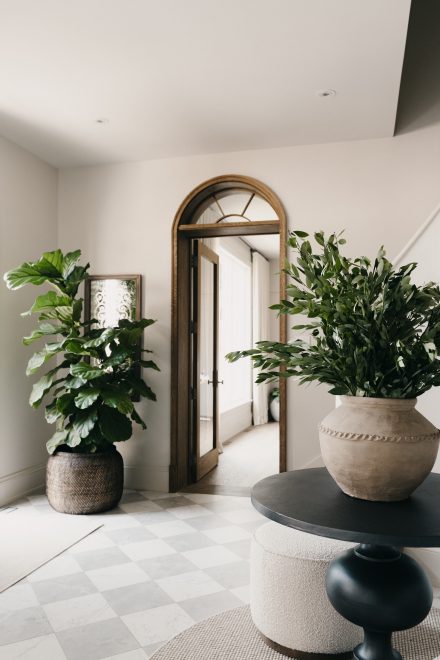
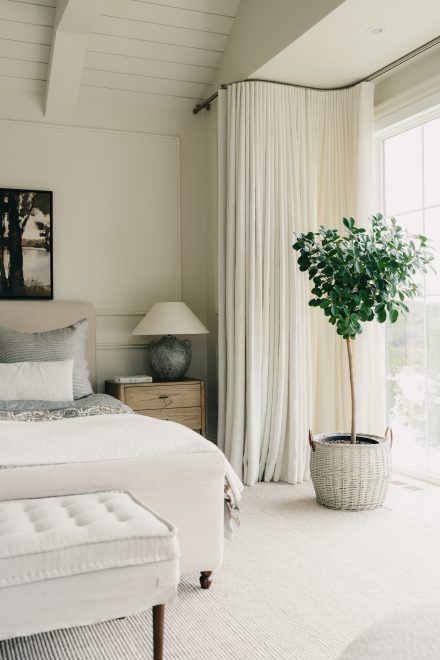
A study on the mental health benefits of spending time outdoors, published by Harvard Health Publishing, highlights that time spent in nature helps reduce stress, improve mood, and support better emotional regulation.
These effects are explained in part by increased sensory stimulation and the ability to reconnect more instinctive with our environment. Every moment spent outdoors, however brief, becomes part of the continuity of an interior designed to support calm.
Natural light, openings to the outside, materials, organic forms, and biophilia all come together to shape a vision of design as a discreet yet powerful support for everyday well-being. A home designed in dialogue with nature follows the human rhythm rather than imposing it.
Designing spaces that allow us to slow down becomes a simple, thoughtful, and sustainable gesture—an approach that Ateliers Jacob advocates for in every project.